Last updated: May 2026 | Data verified against official issuer terms
Disclaimer: We are not financial advisors. The information in this article is for educational purposes only and does not constitute financial advice. Credit card terms, fees, and offers change frequently — always verify current details on the issuer’s official website before applying. This article may contain affiliate links; we may earn a commission if you are approved for a card, at no extra cost to you. Approval is not guaranteed and depends on your creditworthiness.
Groceries are one of the most consistent expenses in any household budget. According to Bureau of Labor Statistics data, the average American spends roughly $6,800 per year — about $567 per month — on food at home. That’s a significant amount of money moving through the checkout line every week, and if you’re not earning elevated rewards on it, you’re leaving real money on the table.
The best grocery credit cards offer between 3% and 6% back at supermarkets — which translates to $200–$400+ in annual rewards for a typical household, without changing a single shopping habit. Choose the right card and your grocery bill effectively funds your next vacation.
But not all grocery cards are created equal. Some have annual fees. Some have spending caps. Some only work at specific store types and exclude Walmart, Target, or wholesale clubs. And some earn cash back while others earn transferable travel points worth far more when redeemed strategically.
This guide breaks down the best credit cards for groceries in 2026 across every type of shopper — from families looking for pure cash back to travelers who want every supermarket trip to build toward a free flight.
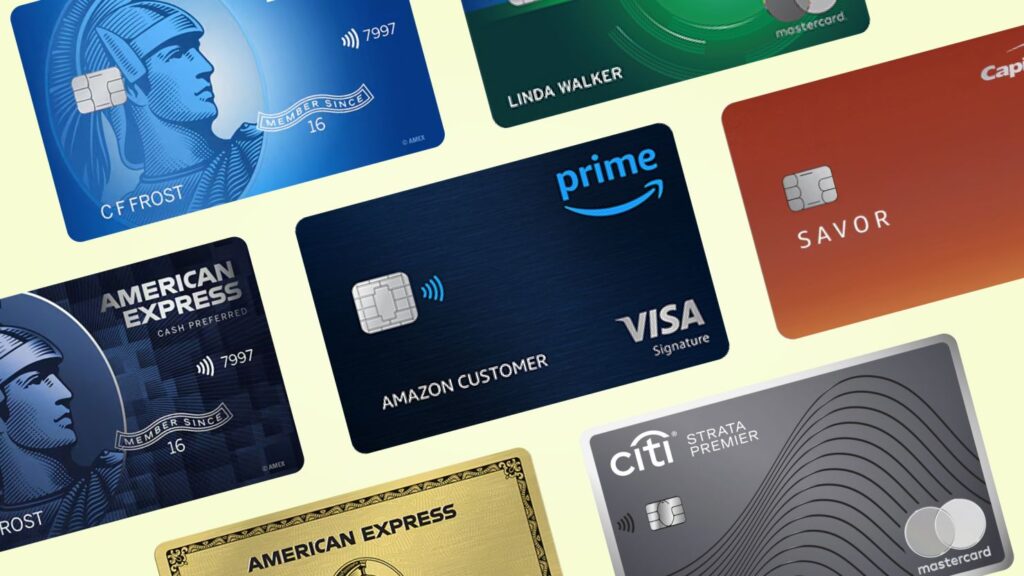
Top Grocery Credit Cards at a Glance
| Card | Grocery Reward Rate | Annual Fee | Best For |
|---|---|---|---|
| Blue Cash Preferred® (Amex) | 6% (up to $6,000/year) | $0 first year, then $95 | Best overall cash back |
| American Express® Gold Card | 4x MR points (up to $25,000/year) | $325 | Best for travel rewards |
| Citi Custom Cash® Card | 5% auto (up to $500/month) | $0 | Best no-fee option |
| Capital One Savor Cash Rewards | 3% unlimited | $0 | Best no-fee, no-cap card |
| Blue Cash Everyday® (Amex) | 3% (up to $6,000/year) | $0 | Best true no-fee Amex |
| Chase Sapphire Preferred® | 3x UR points (online only) | $95 | Best for online grocery orders |
| Citi Strata Premier® | 3x ThankYou points (no cap) | $95 | Best for global grocery travel rewards |
| Prime Visa | 5% at Whole Foods & Amazon Fresh | $0 (Prime membership required) | Best for Amazon/Whole Foods shoppers |
1. Blue Cash Preferred® Card from American Express — Best Overall Grocery Card
Annual Fee: $0 intro for the first year, then $95 Grocery Reward: 6% cash back at U.S. supermarkets on up to $6,000/year in purchases (then 1%) Welcome Offer: As high as $300 cash back after spending $3,000 in the first 6 months (personalized offer; welcome offers vary)
If there is one card that defines the grocery rewards category, it’s the Amex Blue Cash Preferred. No other widely available credit card earns a higher rate at U.S. supermarkets — 6% is the best in the industry, full stop.
The Math for a Typical Household
On the average American grocery spend of $6,800/year:
- First $6,000 at 6% → $360 in cash back
- Remaining $800 at 1% → $8
- Total grocery cash back → $368/year
Subtract the $95 annual fee and you net $273 in pure profit from grocery spending alone — before factoring in the other bonus categories or the welcome offer.
For a family of four spending $12,000/year on groceries, consider having two cardholders each with their own Blue Cash Preferred, effectively doubling the $6,000 cap to $12,000 and netting $625+/year after fees.
Other Earning Rates
- 6% cash back on select U.S. streaming subscriptions (Netflix, Disney+, Hulu, etc.)
- 3% cash back at eligible U.S. gas stations
- 3% cash back on transit (taxis, rideshare, parking, tolls, trains, buses)
- 1% cash back on everything else
The streaming 6% is a sleeper benefit. The average American household spends $50–$80/month on streaming, which adds $36–$58/year at 6% — essentially an extra monthly credit just for keeping your subscriptions on this card.
Additional Perks
- $84/year toward Disney Bundle ($7/month statement credit when you pay $12.99+ on an eligible Disney+ subscription; enrollment required)
- 0% intro APR for 12 months on purchases (then variable rate applies)
- Purchase protection and extended warranty on eligible purchases
The Catch
The 6% rate has a $6,000 annual cap, after which it drops to 1%. For households spending more than $500/month at supermarkets, you’ll hit this cap by the end of the year. Shoppers exceeding the cap should pair the Blue Cash Preferred with the Blue Cash Everyday or another grocery card to maintain a solid rate after the cap is reached.
Also: the Blue Cash Preferred charges a 2.7% foreign transaction fee. Don’t use it internationally.
Who It’s For
The Blue Cash Preferred is the right card for households spending $1,600–$6,000/year on groceries who want straightforward, high-rate cash back. The $95 annual fee is covered after roughly $1,600 in grocery spending at 6%, meaning most households break even within the first few months of the year.
2. American Express® Gold Card — Best Grocery Card for Travel Rewards
Annual Fee: $325 Grocery Reward: 4x Membership Rewards points at U.S. supermarkets on up to $25,000/year (then 1x) Welcome Offer: As high as 100,000 MR points after spending $6,000–$8,000 in first 6 months (personalized offer; welcome offers vary and you may not be eligible)
For travelers who want their grocery spending to fund flights and hotels rather than earn cash back, the Amex Gold Card is the premier choice. Its 4x earning rate at U.S. supermarkets on up to $25,000/year is both higher-cap and more flexible than nearly any competing card.
Why Points Beat Cash Back for Travelers
At face value, 4x Membership Rewards points sounds less impressive than 6% cash back. But the comparison depends heavily on how you redeem. Cash back is always worth 1 cent per dollar of cash back. MR points transferred to the right airline or hotel program can be worth 2–5 cents each.
A household spending $14,000/year on groceries earns:
- Blue Cash Preferred: 6% × $6,000 + 1% × $8,000 = $440 in cash back
- Amex Gold: 4x × $14,000 = 56,000 MR points → worth $1,120–$2,800 when transferred to partners
For travelers willing to engage with transfer partners, the Amex Gold destroys the Blue Cash Preferred in long-term value — especially for higher grocery spenders.
Annual Credits That Offset the Fee
- $120 dining credit ($10/month at Grubhub, Buffalo Wild Wings, The Cheesecake Factory, Five Guys, Wonder; enrollment required)
- $120 in Uber Cash ($10/month toward Uber rides or Uber Eats; enrollment required)
- $100 Resy credit (up to $50 per half-year at qualifying U.S. Resy restaurants)
- $84 Dunkin’ credit ($7/month; enrollment required)
Combined: up to $424/year in credits — more than covering the $325 annual fee if you actively use them.
The Catch
The Amex Gold requires credit management discipline to extract its full value. Monthly credits that go unused are wasted money. And Membership Rewards points redeemed as statement credits are worth only 0.6 cents each — a fraction of their transfer value. This card rewards engaged users, not passive ones.
Who It’s For
The Amex Gold is the right grocery card for travelers who spend $500+/month on groceries, regularly eat out, actively use Uber or food delivery, and are willing to transfer points to airline/hotel partners rather than redeem for cash back. For that profile, it’s the highest-earning grocery card available.
3. Citi Custom Cash® Card — Best No-Annual-Fee Grocery Card
Annual Fee: $0 Grocery Reward: 5% cash back automatically on your top eligible spending category each billing cycle, up to $500 spent (then 1%) Welcome Offer: $200 cash back after spending $1,500 in the first 6 months
The Citi Custom Cash is the smartest no-annual-fee option for grocery shoppers who spend less than $500/month at supermarkets. It earns 5% on up to $500/month in your single highest-spending eligible category — and groceries is one of the qualifying categories. No activation required: the card automatically detects where you’re spending most and applies the 5% rate.
How It Works
If groceries are your biggest monthly expense (which they are for most households), you earn 5% cash back on the first $500 you spend at supermarkets each billing cycle, automatically. Everything beyond $500 earns 1%.
On $500/month in grocery spending: $300/year in cash back with zero annual fee. That’s a strong return that rivals — and often beats — the Blue Cash Preferred once you factor in the annual fee.
The Spending Cap Is the Key Limitation
The $500/month ($6,000/year) cap is exactly in line with the Blue Cash Preferred’s cap — but the Citi Custom Cash only gives you 5% up to $500/month, while the Blue Cash Preferred gives you 6% up to $500/month. On equal spending, the Blue Cash Preferred earns more — but charges $95/year. The Citi Custom Cash wins on net value for lighter spenders.
Additional Perks
- 4% cash back on hotels, car rentals, and attractions booked through Citi Travel (through June 30, 2026)
- 0% intro APR for 18 months on balance transfers (then variable rate applies)
- No foreign transaction fees
Important: Citi Only Issues One Custom Cash Per Person
Citi limits each person to one Custom Cash account. You cannot open multiple to increase your cap.
Who It’s For
The Citi Custom Cash is perfect for single-person households or light spenders who consistently stay under $500/month at supermarkets and don’t want to pay an annual fee. It’s also an excellent secondary card for households who’ve hit the cap on their primary grocery card.
4. Capital One Savor Cash Rewards Credit Card — Best No-Fee Card for Varied Grocery Shoppers
Annual Fee: $0 Grocery Reward: 3% unlimited cash back at grocery stores (excluding superstores like Walmart and Target) Welcome Offer: Check Capital One’s website for current offer
The Capital One Savor earns 3% at grocery stores with no annual cap — making it the best choice for households that spend more than $6,000/year at supermarkets and want simplicity. While 3% is lower than the Blue Cash Preferred’s 6% or the Citi Custom Cash’s 5%, the unlimited nature makes it powerful for heavy spenders.
Earning Rates
- 8% cash back on Capital One Entertainment purchases
- 5% cash back on hotels, vacation rentals, and rental cars booked through Capital One Travel
- 3% cash back at grocery stores
- 3% cash back on dining, popular streaming services, and entertainment
- 1% cash back on everything else
The breadth of the Savor’s 3% categories is its real strength: groceries, dining, streaming, and entertainment all earn 3% with no cap. For a household that spends heavily across all these categories, this card can generate substantial rewards without an annual fee.
Who It’s For
The Savor is the right pick for no-fee seekers who spend more than $500/month at supermarkets (where the Citi Custom Cash’s cap would be a problem), or who want a single card that covers groceries, dining, and entertainment equally well. It’s also a strong secondary card for grocery spending that exceeds other cards’ annual caps.
5. Blue Cash Everyday® Card from American Express — Best True No-Fee Amex
Annual Fee: $0 Grocery Reward: 3% cash back at U.S. supermarkets on up to $6,000/year (then 1%) Welcome Offer: As high as $200 cash back after spending $2,000 in the first 6 months (personalized offer)
The Blue Cash Everyday is the no-fee sibling of the Blue Cash Preferred. It earns half the grocery rate (3% vs. 6%) but costs nothing annually.
Earning Rates
- 3% cash back at U.S. supermarkets (up to $6,000/year, then 1%)
- 3% cash back at U.S. online retailers
- 3% cash back at U.S. gas stations (up to $6,000/year, then 1%)
- 1% cash back everywhere else
The 3% at U.S. online retailers is a unique benefit — covering purchases at merchants like Amazon, Target.com, and Walmart.com that often don’t code as “grocery” on other cards. This makes the Blue Cash Everyday surprisingly strong for households that do a significant portion of their shopping online.
Blue Cash Preferred vs. Blue Cash Everyday: Which Wins?
The break-even point is simple math. The Blue Cash Preferred earns 3% more on groceries but costs $95/year. To justify the Preferred over the Everyday, you need to spend enough for the extra 3% to generate $95+:
$95 ÷ 3% = $3,167 in annual grocery spending
If your household spends more than $3,167/year (~$264/month) on groceries, the Blue Cash Preferred earns more after its fee. Below that threshold, the Blue Cash Everyday wins on net value.
Who It’s For
The Blue Cash Everyday is the right choice for smaller households or lighter grocery spenders who want a simple, no-fee Amex with solid rewards and don’t want to think about whether they’re covering an annual fee.
6. Chase Sapphire Preferred® Card — Best for Online Grocery Orders
Annual Fee: $95 Grocery Reward: 3x Ultimate Rewards points on online grocery purchases (excluding Target, Walmart, and wholesale clubs)
The Chase Sapphire Preferred’s grocery category is narrowly defined — online purchases only — but it covers a broader range of merchants than it might first appear: grocery store websites, grocery delivery apps, and even meal kit services like HelloFresh can qualify.
For households that primarily order groceries online for delivery or pickup, the Preferred’s 3x UR on these purchases is valuable — especially because UR points transfer to World of Hyatt and 13 other airline and hotel partners.
When It Makes Sense for Groceries
If you already have the Sapphire Preferred for its travel benefits and regularly order groceries online, maximizing this category costs you nothing extra. Use the Preferred for online grocery orders, then fall back to a dedicated grocery card (like the Blue Cash Preferred or Amex Gold) for in-store shopping.
Who It’s For
The Sapphire Preferred is not a primary grocery card — but for online grocery shoppers who travel regularly and already want the card for its Chase Ultimate Rewards access and travel protections, the grocery benefit is a strong bonus.
7. Prime Visa — Best for Amazon and Whole Foods Shoppers
Annual Fee: $0 (requires active Amazon Prime membership at $139/year) Grocery Reward: 5% at Whole Foods Market and on Amazon Fresh orders
The Prime Visa is a specialized tool for a specific kind of grocery shopper: one who buys primarily at Whole Foods or through Amazon Fresh delivery.
At Whole Foods, 5% back on every purchase adds up quickly for families who shop there regularly. Combined with 5% at Amazon.com, the Prime Visa can be an exceptional earner for households that concentrate their spending in the Amazon ecosystem.
The effective annual fee — $139 for Prime — is a real cost to factor in if you’re not already a Prime member for other reasons. But if you already subscribe, the card has no additional cost and delivers strong rewards.
Who It’s For
Prime members who shop regularly at Whole Foods or use Amazon Fresh. Not the right card for shoppers at conventional supermarket chains.
Which Grocery Card Is Right for You?
Use these questions to identify your best match:
Do you want cash back or travel points?
- Cash back → Blue Cash Preferred (6%, capped) or Capital One Savor (3%, unlimited)
- Travel points → Amex Gold (4x MR, up to $25,000/year) or Citi Strata Premier (3x, uncapped)
Do you want to pay an annual fee?
- Yes, if it earns more → Blue Cash Preferred ($95) or Amex Gold ($325)
- No annual fee → Citi Custom Cash (5%, capped $500/mo), Capital One Savor (3%, uncapped), Blue Cash Everyday (3%, capped)
How much do you spend on groceries per month?
- Under $300/month → Citi Custom Cash (no fee, 5% auto)
- $300–$500/month → Blue Cash Preferred ($95, 6%) or Citi Custom Cash (tie)
- $500–$2,000/month → Amex Gold (4x MR, $25,000 annual cap, strongest travel value)
- Over $2,000/month → Amex Gold + a secondary no-cap card like Capital One Savor
Do you shop primarily online or in-store?
- In-store → Blue Cash Preferred, Amex Gold, Capital One Savor
- Online → Chase Sapphire Preferred (3x on online groceries), Prime Visa (5% at Amazon Fresh/Whole Foods)
Do you shop at Walmart, Target, or Costco?
- Important note: Most grocery rewards cards — including Amex cards and the Sapphire Preferred — exclude Walmart, Target, and wholesale clubs from their grocery category. These purchases typically earn just 1x or the base rate on those cards.
- For Costco: The Costco Anywhere Visa by Citi earns 2% at Costco and Costco.com
- For Walmart/Target: a flat-rate card like Citi Double Cash (2% on everything) is more efficient than a “grocery” card that won’t give you the bonus
A Note on What Counts as a “Supermarket”
Credit card issuers use Merchant Category Codes (MCC) to determine how to classify a purchase. The key rules to know:
- Included: Traditional supermarkets and grocery chains (Kroger, Safeway, Publix, Whole Foods, Trader Joe’s, Sprouts, etc.)
- Excluded: Walmart, Target, warehouse clubs (Costco, BJ’s, Sam’s Club)
- Varies by card: Some specialty food stores, butchers, ethnic grocery markets, and delivery apps may or may not trigger the grocery category depending on how they’re coded
- Online grocery orders: Generally qualify for grocery category when ordered directly from a supermarket’s website or app — but third-party delivery services may code differently
When in doubt, make a small test purchase before committing large spending to a new card.
How to Maximize Grocery Rewards: Tips That Work
Stack your grocery card with a flat-rate card for overflow. Once you hit the $6,000 cap on the Blue Cash Preferred, switch to the Citi Double Cash (2% on everything) for the rest of the year. Don’t earn 1% when 2% is available.
Use Amex Offers for additional supermarket savings. Both Blue Cash cards and the Amex Gold regularly feature Amex Offers for bonus cash back or statement credits at specific grocery chains. Stack these with your base earning rate for maximum value.
Consider loyalty programs. Most major grocery chains have free loyalty programs that offer digital coupons, fuel points, and member pricing. These stack with your credit card rewards for double-dipping savings at no extra cost.
Time your card application around high-spend periods. If you’re applying for a card with a minimum spending requirement for the welcome bonus, Q4 (Thanksgiving, holiday cooking, Christmas gatherings) often sees grocery spending spike naturally — making it easier to hit the bonus without changing your habits.
Frequently Asked Questions
What is the highest cash back rate available for groceries? The Blue Cash Preferred from American Express offers the highest publicly available rate at 6% on U.S. supermarket purchases, up to $6,000/year. After the cap, it drops to 1%.
Does Walmart count as a grocery store for credit card rewards? Almost never. Major grocery rewards cards — including all Amex cards and the Chase Sapphire Preferred — explicitly exclude Walmart from their grocery category. A flat-rate card like the Citi Double Cash (2% on everything) is typically the best choice for Walmart spending.
Does Costco count as a grocery store for rewards? No. Most grocery credit cards exclude warehouse clubs. The Costco Anywhere Visa by Citi is specifically designed for Costco shoppers and earns 2% at Costco locations.
What’s the best no-annual-fee grocery credit card? The Citi Custom Cash (5% auto on your top eligible category, up to $500/month) is the strongest no-fee option for spending under $500/month. The Capital One Savor (3%, unlimited) is better for heavier grocery spenders.
Can I use grocery credit card rewards for travel? Yes — with the right card. The Amex Gold earns Membership Rewards points that transfer to 20 airline and hotel partners. The Chase Sapphire Preferred earns Ultimate Rewards points that transfer to 14 partners including World of Hyatt. The Citi Strata Premier earns ThankYou points that transfer to airlines. Cards like Blue Cash Preferred earn cash back only — no transfer to travel partners.
Is the Amex Gold worth it as a grocery card? For households spending $500+/month on groceries who travel regularly and actively use the dining and Uber credits, yes. Its 4x on U.S. supermarkets on up to $25,000/year, combined with annual credits that can exceed the $325 fee, and 20 transfer partners, makes it the strongest long-term grocery card for travelers. For cash back seekers or light spenders, the Blue Cash Preferred or a no-fee card is the better choice.
Do grocery delivery services like Instacart earn grocery rewards? It depends on the card and how the merchant codes. Instacart orders placed through the Instacart app typically code as “Instacart,” not as a grocery store — and may not trigger grocery bonus rates on most cards. Orders placed directly through a supermarket’s website (e.g., kroger.com for Kroger delivery) more reliably trigger the grocery category. Always verify with a small test purchase.
Information in this article is based on publicly available data from official issuer websites and financial publications as of May 2026. Merchant coding rules can vary and change; always verify bonus category eligibility with your card issuer before making large purchases. This article is for informational purposes only. Always check the card issuer’s official website for current rates, fees, terms, and credit availability before applying.