Last updated: May 2026 | Data verified against official issuer terms
Disclaimer: We are not financial advisors. The information in this article is for educational purposes only and does not constitute financial advice. Credit card terms, fees, and offers change frequently — always verify current details on the issuer’s official website before applying. This article may contain affiliate links; we may earn a commission if you are approved for a card, at no extra cost to you. Approval is not guaranteed and depends on your creditworthiness.
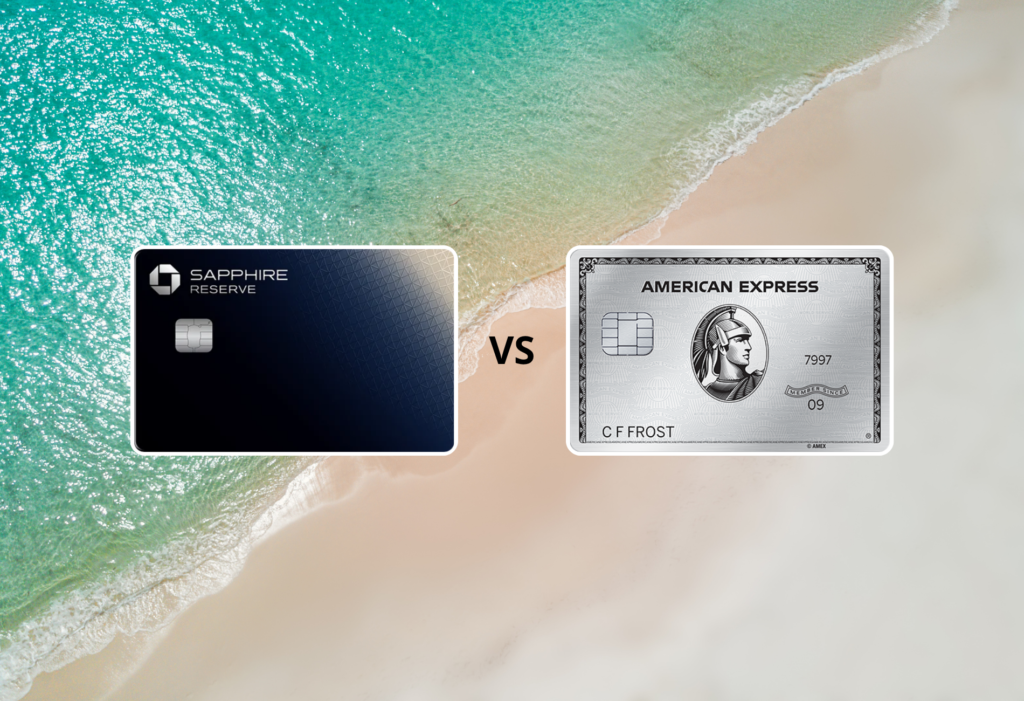
Two cards. Two enormous annual fees. Two radically different philosophies about what a premium travel card should be.
The American Express Platinum Card® at $895/year and the Chase Sapphire Reserve® at $795/year are the undisputed champions of the premium consumer card market. Both have raised their annual fees significantly in 2025, and both have responded by loading their benefit stacks with enough credits and perks to — on paper — far exceed those fees in annual value.
The $100 price difference between them is almost irrelevant. What matters is whether you’ll actually use what each card offers. The Platinum leans into luxury experiences, unmatched lounge access, and a sprawling list of lifestyle credits that require active management. The Reserve leans into travel simplicity, superior travel protections, and a benefits structure that’s meaningfully easier to extract value from without playing a monthly credit optimization game.
This is the definitive comparison for 2026 — every credit, every lounge, every earning rate, every transfer partner, and an honest verdict on which card makes sense for you.
Quick Comparison: Amex Platinum vs. Chase Sapphire Reserve 2026
| Feature | Amex Platinum® | Chase Sapphire Reserve® |
|---|---|---|
| Annual Fee | $895 | $795 |
| Welcome Bonus | Up to 175,000 MR points (personalized, spend $12,000/6 months) | 150,000 UR points (spend $6,000/3 months) |
| Points on Flights (direct) | 5x | 4x |
| Points on Hotels (direct) | 1x | 4x |
| Points on Dining | 1x | 3x |
| Points on Chase/Amex Travel | 5x prepaid hotels | 8x all travel |
| Points on Everything Else | 1x | 1x |
| Simple $300 Travel Credit | No | Yes (any travel purchase) |
| Lounge Network | 1,550+ (Centurion + Priority Pass + Delta Sky Club + more) | 1,300+ (Priority Pass + Sapphire Lounges + Maple Leaf) |
| Centurion Lounges | Yes (unlimited, solo) | No |
| Delta Sky Club Access | 10 visits/year (when flying Delta) | No |
| Guest Lounge Policy (Centurion) | $50/guest (free with $75k annual spend) | 2 guests free (Chase Sapphire Lounges) |
| Hotel Elite Status | Hilton Gold + Marriott Gold (automatic) | IHG Platinum Elite |
| Trip Cancellation Insurance | No | Up to $10,000/person |
| Primary Rental Car Insurance | No (secondary) | Yes |
| Emergency Medical/Evacuation | No | Up to $100,000 |
| Transfer Partners | 20 (17 airline + 3 hotel) | 14 (11 airline + 3 hotel) |
| Hyatt Transfer | No | Yes (1:1) |
| Delta SkyMiles Transfer | Yes (1:1) | No |
| Redemption Value (portal) | 1 cent/point (Amex Travel) | Up to 2 cents/point (Points Boost) |
| Authorized User Fee | $195/additional Platinum cardholder | $195/year |
| Foreign Transaction Fees | None | None |
Annual Fee: $895 vs. $795
Let’s acknowledge the obvious: these are extraordinary annual fees. Paying $895 or $795 per year for a credit card is a significant commitment, and neither should be taken lightly.
Both fees are justified — but only for specific types of travelers. The key question for both cards is the same: can you realistically extract more value in credits, travel experiences, and rewards than you pay in fees?
Both the Amex Platinum and Chase Sapphire Reserve can deliver $3,000–$4,000+ in annual value when fully utilized, but the math requires real engagement with each card’s benefit structure. Passive cardholders who don’t actively use the credits will overpay for either product.
Winner: Chase Sapphire Reserve — by $100/year. A meaningful but not decisive difference.
Welcome Bonus
Amex Platinum: You may be eligible for as high as 175,000 Membership Rewards points after spending $12,000 within the first 6 months (personalized offer; welcome offers vary and you may not be eligible for an offer).
Chase Sapphire Reserve: 150,000 Ultimate Rewards points after spending $6,000 in the first 3 months from account opening.
At current TPG May 2026 valuations (MR at 2¢/point, UR at 2.05¢/point):
- Amex Platinum 175,000 points → up to $3,500 in travel value
- Chase Sapphire Reserve 150,000 points → approximately $3,075 in travel value
The Amex Platinum’s potential welcome bonus is higher — but with significant caveats. The personalized offer structure means not all applicants receive 175,000 points. The $12,000 spending requirement over 6 months is also substantially higher than the Reserve’s $6,000 over 3 months. The Reserve’s offer is fixed, publicly advertised, and easier to earn.
Additionally, Chase limits bonus eligibility for the Reserve — if you’ve previously received a Sapphire Reserve welcome offer, regardless of how much time has passed, you are no longer eligible to receive another welcome bonus on that card.
Winner: Amex Platinum on maximum potential value. Chase Sapphire Reserve on accessibility and predictability.
Earning Rates: Where Each Card Wins
This is one of the most decisive differences between the two cards, and it strongly favors the Sapphire Reserve for most cardholders.
Amex Platinum Earning Rates
- 5x MR points on flights booked directly with airlines or through Amex Travel (up to $500,000/year)
- 5x MR points on prepaid hotels booked through Amex Travel
- 1x points on virtually everything else
The Platinum’s earning structure is laser-focused: it excels on airfare and Amex Travel bookings, and essentially earns nothing meaningful anywhere else. Dining, groceries, entertainment, gas, shopping — all earn 1x.
Chase Sapphire Reserve Earning Rates
- 8x UR points on all purchases through Chase Travel (including The Edit)
- 4x UR points on flights and hotels booked directly with airlines and hotels
- 3x UR points on dining worldwide
- 1x UR points on everything else
The Reserve’s 3x on dining is one of the most valuable category bonuses at the premium tier. For cardholders spending $500–$1,000/month at restaurants (common for frequent travelers who also dine well), the Reserve generates meaningfully more points from everyday spending than the Platinum.
The 4x on direct hotel bookings is particularly significant: the Platinum earns just 1x on hotels not booked through Amex Travel. If you book hotels directly with the chain (to earn hotel loyalty points or use elite status benefits), the Reserve is dramatically more rewarding.
Winner: Chase Sapphire Reserve — by a wide margin for everyday spending. The Platinum only wins on airfare purchased through specific channels.
Airport Lounge Access: The Amex Platinum’s Greatest Strength
Lounge access is where the Amex Platinum makes its most compelling case — and where it remains unmatched.
Amex Platinum Lounge Network
The Amex Platinum provides access to over 1,550 airport lounges through its Global Lounge Collection, including Amex Centurion Lounges, Priority Pass Select lounges, and Delta Sky Club visits when flying eligible Delta flights.
Breaking it down:
Centurion Lounges are consistently rated the best domestic airport lounges in the United States — free food and beverage (including cocktails), local chef-curated menus, showers at select locations, and a quiet, uncrowded atmosphere relative to Priority Pass alternatives. Amex currently operates 40+ Centurion Lounges globally, with new locations opening at Newark and Amsterdam in 2026.
Delta Sky Club: 10 complimentary visits per year when flying Delta or eligible Delta-marketed flights. After the 10 visits, access costs $50 per visit.
Priority Pass Select: Access to 1,300+ lounges globally (enrollment required).
Plaza Premium Lounges: Access at dozens of international airports.
Important 2026 Guest Policy Update: To bring guests into Centurion Lounges without a fee, cardholders must spend $75,000 in eligible purchases within a calendar year. Otherwise, guests are charged $50 per adult (ages 18+) or $30 per child (ages 3–17). Additionally, a same-flight travel requirement for Centurion Lounge guests takes effect July 8, 2026. For travelers who regularly bring a companion, this policy change meaningfully increases the effective cost of Amex Platinum lounge access.
Chase Sapphire Reserve Lounge Network
The Sapphire Reserve provides access to Chase Sapphire Lounges and lets cardholders bring up to two guests for no additional fee or minimum spending requirement. Cardholders also get Priority Pass Select membership and access to select Maple Leaf Lounges and Air Canada Cafes in Canada, Europe and the U.S.
Chase Sapphire Lounges are genuinely excellent — modern design, quality food and beverage — but the network is limited to 8+ locations (including New York JFK, Boston Logan, Hong Kong, and several others). The key advantage: despite its smaller footprint, Sapphire Lounges could be more preferable for those who travel with companions since you can bring up to two guests without reaching a minimum spending requirement.
Winner: Amex Platinum — for solo travelers or those who can absorb guest fees, the breadth and quality of the Centurion network is unmatched. Chase Sapphire Reserve wins on guest access simplicity for couples and families.
Annual Credits: Amex Has More, Chase Has Better
Both cards have transformed into “coupon book” products — the annual fee is partially offset by a portfolio of statement credits. The question is whether you’ll actually use them.
Amex Platinum Credits (2026 — Enrollment Required for Most)
| Credit | Annual Value |
|---|---|
| Airline incidental fee credit | $200 |
| Uber Cash + Uber One | $200 + $120 |
| Fine Hotels + Resorts / Hotel Collection | Up to $600 |
| Resy dining credit | Up to $200 (verify current amount) |
| CLEAR Plus membership | Up to $189 |
| Digital entertainment | Up to $240 |
| Walmart+ membership | ~$155 |
| Equinox membership | Up to $300 |
| lululemon credit | Up to $300 (quarterly) |
| Oura Ring credit | Up to $200 |
| Global Entry / TSA PreCheck | Up to $120 (every 4 years) |
Total potential credits: well over $2,500/year — more than double the annual fee on paper. But the operative word is “potential.” Many of these credits require enrollment, specific spending patterns, and active management to capture. Credits like the Equinox and lululemon are genuinely useful for people who already use those services, and genuinely worthless for those who don’t.
Chase Sapphire Reserve Credits (2026)
| Credit | Annual Value |
|---|---|
| Annual travel credit (any travel) | $300 |
| The Edit hotel credit | Up to $500 ($250 per booking) |
| Select hotel credit (IHG, Omni, etc.) | Up to $250 |
| Sapphire Reserve Exclusive Tables dining | Up to $300 |
| StubHub / Viagogo credit | Up to $300 (through Dec. 31, 2027) |
| Apple TV+ and Apple Music | ~$288 (through June 22, 2027) |
| Lyft credit | Up to $120 (through Sept. 30, 2027) |
| Peloton credit | Up to $120 |
| DoorDash / DashPass | Up to $300 + complimentary membership |
| Global Entry / TSA PreCheck | Up to $120 (every 4 years) |
Total potential: over $2,700/year — similarly impressive. But the Reserve’s credits are, in practice, easier to use:
Winner: American Express for amount of credits; Chase for real-world applicability and ease of use. The Reserve’s $300 travel credit applies automatically to any travel purchase — no enrollment, no specific merchant, no category restriction. The Amex Platinum’s airline credit requires you to designate a specific airline each year and applies only to incidentals, not airfare.
Winner: Tie on raw value. Chase Sapphire Reserve on practical usability and simplicity.
Travel Protections: Reserve Wins Decisively
This is the sharpest practical difference between the two cards, and it matters enormously for frequent international travelers.
| Protection | Amex Platinum | Chase Sapphire Reserve |
|---|---|---|
| Trip Cancellation/Interruption | No | Up to $10,000/person |
| Trip Delay Coverage | Yes (limited) | After 6 hours, up to $500/ticket |
| Primary Rental Car Insurance | No (secondary) | Yes (primary) |
| Emergency Medical Coverage | No standalone | Up to $100,000 |
| Emergency Evacuation | No standalone | Up to $100,000 |
| Lost Luggage | Limited | Up to $3,000/person |
| Baggage Delay | Yes | After 6 hours |
The Sapphire Reserve goes a step further by including up to $100,000 in emergency medical and evacuation coverage, a meaningful benefit for international travelers. The Amex Platinum, by contrast, provides secondary rental car insurance and focuses more on travel assistance and coordination services rather than standalone insurance.
Primary rental car insurance alone is worth $20–$40 per rental day that you would otherwise pay to the rental agency. Trip cancellation up to $10,000 per person provides genuine financial protection on expensive international itineraries. Emergency medical and evacuation coverage can be the most valuable benefit of all — medical evacuation internationally can cost $100,000+.
The Amex Platinum does offer some trip protections, but they are secondary and more limited in scope. For travelers venturing outside the U.S. — particularly to destinations with limited medical infrastructure — the Sapphire Reserve’s protections are far superior.
Winner: Chase Sapphire Reserve — emphatically.
Transfer Partners: Amex Has More, Chase Has Better (For U.S. Travelers)
Amex Platinum: 20 Partners (17 Airline + 3 Hotel)
Amex Membership Rewards transfers to more partners than any other major U.S. credit card issuer. Key partners include Air France/KLM Flying Blue, Delta SkyMiles, British Airways Avios, Singapore Airlines KrisFlyer, ANA Mileage Club, Emirates Skywards, Air Canada Aeroplan, Virgin Atlantic Flying Club, Cathay Pacific Asia Miles, and more.
Hotel partners: Hilton Honors, Marriott Bonvoy, Choice Privileges.
The Delta SkyMiles transfer is a significant differentiator — Chase does not partner with Delta, making the Amex Platinum the only premium card that allows you to transfer points to Delta’s loyalty program.
Chase Sapphire Reserve: 14 Partners (11 Airline + 3 Hotel)
Chase transfers at 1:1 to all 14 partners with no unfavorable ratios. Key partners: United MileagePlus, Southwest Rapid Rewards, British Airways Avios, Air France/KLM Flying Blue, Singapore Airlines KrisFlyer, Air Canada Aeroplan, Virgin Atlantic Flying Club, and more.
Hotel partners: World of Hyatt (the decisive advantage), Marriott Bonvoy, IHG One Rewards.
The Hyatt Advantage: World of Hyatt transfers exclusively through Chase and consistently delivers the highest hotel redemption value of any program — often 3–5 cents per point at full-service resorts, Category 1 properties starting at 3,500 points per night, and all-inclusive Hyatt resorts where a single night can represent $400–$600 in cash value.
The Amex Platinum wins for airline partners (20 vs. 13) and lounge access. The Chase Sapphire Reserve wins for hotel value with the 1:1 Hyatt transfer and The Edit hotel credits.
Winner: Amex Platinum on partner quantity. Chase Sapphire Reserve on hotel redemption value via Hyatt.
Hotel Elite Status
Amex Platinum: Both the Amex Platinum and Business Platinum offer complimentary Hilton Honors Gold and Marriott Bonvoy Gold Elite status upon enrollment — no stays or spending required.
Hilton Gold includes room upgrades when available, 80% bonus points on Hilton stays, and complimentary breakfast or credit at many full-service properties. Marriott Gold includes 25% bonus points and priority late checkout. These statuses are genuinely valuable, particularly Hilton Gold at properties that offer breakfast to Gold members.
Chase Sapphire Reserve: IHG One Rewards Platinum Elite status (through Dec. 31, 2027). IHG Platinum is a solid mid-tier status but less universally valuable than Hilton or Marriott Gold.
Winner: Amex Platinum — Hilton Gold and Marriott Gold are meaningfully superior to IHG Platinum Elite for most travelers.
Redemption Value: Reserve Has the Edge
Amex Platinum: MR points are generally worth 1 cent each through Amex Travel. Notably, redeeming for hotel stays through Amex Travel often drops to 0.7 cents per point — below face value. The best value comes from transfer partner redemptions at 2+ cents per point.
Chase Sapphire Reserve: UR points are worth 1.5 cents each as a baseline through Chase Travel, rising to up to 2 cents per point on select bookings through Points Boost. The baseline portal value alone exceeds Amex’s 1 cent by 50%.
Winner: Chase Sapphire Reserve — higher portal redemption value and no below-par hotel redemption trap.
The “Coupon Book” Problem: Who Actually Gets Value?
Both cards have evolved into lifestyle management tools as much as travel cards. The core challenge for both: you must actively manage a list of monthly and biannual credits to extract the advertised value.
The Amex Platinum is harder to maximize. With 10+ separate credit categories requiring enrollment, specific merchant eligibility, and monthly timing, the Platinum rewards dedicated credit optimizers. Miss the monthly Uber Cash? It doesn’t roll over. Forget the airline incidental credit deadline? Gone for the year. The Equinox credit is worthless if you don’t have a gym membership.
The Chase Sapphire Reserve is easier to maximize. The $300 travel credit is the single most frictionless credit in premium card history — it applies automatically to any travel purchase. The hotel credits require portal bookings, but the portal experience is straightforward. The Apple TV+ and Apple Music credits are largely automatic once activated.
The Chase Sapphire Reserve’s $300 travel credit remains the simplest for most luxury couples, while the Amex Platinum offers a broader but more fragmented set of lifestyle credits.
Who Should Get the Amex Platinum?
The Platinum makes the most sense if:
- You fly 6+ times per year and want the best airport lounge experience, particularly at U.S. airports with Centurion Lounges
- You’re a Delta loyalist — the Delta Sky Club visits and Delta SkyMiles transfer are irreplaceable benefits unavailable on any Chase card
- You stay regularly at Hilton and Marriott properties and will benefit from automatic Gold status
- You spend significantly on airfare booked directly with airlines (5x vs. 4x is meaningful at high volume)
- You actively use lifestyle credits in categories like Equinox, lululemon, and digital entertainment
- You travel solo and the $50/guest Centurion lounge fee for companions doesn’t significantly affect you
Who Should Get the Chase Sapphire Reserve?
The Reserve makes the most sense if:
- You want comprehensive travel protections — primary rental car insurance, trip cancellation up to $10,000, and emergency medical coverage up to $100,000
- You regularly travel internationally where medical and evacuation coverage is practically valuable
- You spend heavily on dining (3x is a category the Platinum simply doesn’t reward)
- You’re committed to Hyatt hotel redemptions — the only path to World of Hyatt transfers
- You want a simpler benefit structure where the $300 travel credit works automatically without category restrictions
- You regularly travel with companions and want two free guests at Sapphire Lounges without spending requirements
Can You Have Both?
Yes — and many premium travelers hold both cards simultaneously. The strategic combination:
- Amex Platinum handles all airfare (5x MR on flights), lounge access, Hilton/Marriott status, and Delta-related travel
- Chase Sapphire Reserve handles dining (3x UR), hotel bookings direct (4x UR), trip protections, Hyatt redemptions, and the simple $300 travel credit
The combined annual fee of $1,690 is obviously steep. This combination makes sense for true frequent travelers — business class flyers, hotel point collectors, or those with significant travel budgets — who can realistically extract $3,000–$4,000+ per card in value.
The Verdict
For most travelers, the Chase Sapphire Reserve is the better card in 2026.
The simplicity advantage is real. The Reserve’s $300 travel credit requires no management. The 3x on dining rewards how premium travelers actually spend their daily lives. The travel protections — particularly primary rental car insurance, trip cancellation, and emergency medical — provide genuine peace of mind that the Platinum simply cannot match. And for the growing number of hotel travelers who have discovered Hyatt’s exceptional value, the Sapphire Reserve is the only path to that transfer partner.
For airport lounge devotees and Delta loyalists, the Amex Platinum remains in a class of its own. No card matches its lounge access breadth, and Centurion Lounges at major U.S. airports are meaningfully superior to any alternative. If you fly through cities with Centurion Lounges and primarily want to fly Delta, the Platinum’s lounge advantages can justify the extra $100/year.
The honest reality: both cards are genuinely excellent for the right traveler. The worst outcome is choosing either card passively — paying $795–$895 annually without extracting the credits and perks that justify it.
Frequently Asked Questions
Which card has a lower annual fee? The Chase Sapphire Reserve at $795/year is $100 cheaper than the Amex Platinum at $895/year.
Does the Amex Platinum include trip cancellation insurance? No. The Amex Platinum does not include standalone trip cancellation/interruption insurance. The Chase Sapphire Reserve provides up to $10,000 per person in trip cancellation coverage — one of the most important differentiators between the two cards.
Can I transfer Amex Platinum points to Hyatt? No. World of Hyatt is a Chase Ultimate Rewards exclusive transfer partner. The Amex Platinum cannot transfer points to Hyatt.
Does the Chase Sapphire Reserve include Centurion Lounge access? No. Centurion Lounges are exclusive to Amex Platinum and Amex Centurion cardholders. The Sapphire Reserve provides Priority Pass Select membership and access to Chase Sapphire Lounges.
Which card earns more on dining? The Chase Sapphire Reserve earns 3x on dining worldwide. The Amex Platinum earns just 1x on dining. This is one of the most significant practical differences for cardholders who dine out frequently.
Can I hold both the Amex Platinum and Chase Sapphire Reserve? Yes. There are no restrictions on holding cards from different issuers simultaneously. Many frequent travelers hold both to maximize benefits across different categories.
What credit score do I need for these cards? Both cards typically require excellent credit — generally a FICO score of 720 or higher, with the strongest approval rates above 750. These are premium products designed for applicants with strong, established credit histories.
Information in this article is based on publicly available data from official issuer websites and financial publications as of May 2026. Credit card terms, annual fees, credits, and benefits are subject to change — particularly for the Amex Platinum, which underwent significant changes in 2025–2026. Always verify current terms at the issuer’s official website before applying. Enrollment is required for select Amex Platinum benefits. This article is for informational purposes only.