Last updated: May 2026 | Data verified against official issuer terms
Disclaimer: We are not financial advisors. The information in this article is for educational purposes only and does not constitute financial advice. Credit card terms, fees, and offers change frequently — always verify current details on the issuer’s official website before applying. This article may contain affiliate links; we may earn a commission if you are approved for a card, at no extra cost to you. Approval is not guaranteed and depends on your creditworthiness.
Using the wrong credit card internationally is one of the most consistently expensive mistakes travelers make — and one of the easiest to fix.
A card that charges a 3% foreign transaction fee on every international purchase doesn’t just cost money — it erases whatever rewards you earn. Spending $5,000 on a two-week international trip with a 3% FTF card generates $150 in fees alone. If that card earns 2% cash back, you’ve netted exactly nothing. A no-foreign-fee card earning the same 2% puts $100 back in your pocket instead.
Beyond fees, the best international travel cards offer genuine trip protections — emergency medical coverage, trip cancellation insurance, primary rental car coverage — that can be worth thousands of dollars when something goes wrong abroad. And in enough countries, something always goes wrong.
This guide covers the best credit cards for international travel in 2026, organized by type: premium travelers, mid-tier value seekers, budget travelers, and specific scenarios like medical coverage, lounge access abroad, and no-annual-fee options.
What Makes a Credit Card Good for International Travel?
Before diving into specific cards, it helps to know what actually matters when you’re abroad.
No foreign transaction fees (FTF). The absolute baseline requirement. Cards that charge 3% on every international purchase cost more than they return in rewards for most travelers. Every card recommended in this guide charges $0 in foreign transaction fees.
Wide card network acceptance. Visa and Mastercard have the strongest global acceptance. American Express acceptance has improved significantly in Western Europe, Australia, and major cities worldwide, but can still be inconsistent at smaller merchants, rural areas, and developing-market countries. Discover has limited international acceptance. If your primary international card is Amex, always carry a Visa or Mastercard backup.
Travel protections that matter. Trip cancellation insurance, emergency medical coverage, medical evacuation, and primary rental car insurance all become critically relevant when traveling internationally. The difference between a card with and without these protections can be the difference between a manageable setback and a financial catastrophe.
Bonus categories that apply internationally. Some cards earn bonus points only at U.S. merchants. Cards that earn elevated rates on dining and travel worldwide are far more valuable for international spending.
Chip-and-PIN compatibility. Most international merchants (particularly in Europe) use chip-and-PIN terminals. All major U.S. credit cards now include EMV chips, but most American cards default to chip-and-signature rather than chip-and-PIN. For unmanned terminals (train ticket machines, toll kiosks in Europe), chip-and-PIN is sometimes required. Most card issuers now support PIN setup — call your issuer before traveling to set up a PIN on your card.
Quick Comparison: Best Cards for International Travel 2026
| Card | Annual Fee | FTF | Best For | Top International Earning |
|---|---|---|---|---|
| Chase Sapphire Reserve® | $795 | $0 | Best overall premium | 4x flights & hotels direct; 3x dining worldwide |
| Chase Sapphire Preferred® | $95 | $0 | Best mid-tier value | 3x dining worldwide; 2x travel |
| Capital One Venture X | $395 | $0 | Best value premium | 2x everywhere; 10x C1 Travel |
| Amex Platinum® | $895 | $0 | Best lounge access + Centurion | 5x flights direct; 1x elsewhere |
| Capital One Venture | $95 | $0 | Best simple earner | 2x everywhere |
| Wells Fargo Autograph® | $0 | $0 | Best no-fee travel card | 3x restaurants & travel |
| Capital One Savor | $0 | $0 | Best no-fee dining abroad | 3x dining & entertainment |
| Discover it® Cash Back | $0 | $0 | Best no-fee rotating | 1%–5% rotating |
1. Chase Sapphire Reserve® — Best Overall Card for International Travel
Annual Fee: $795 Foreign Transaction Fee: $0 Card Network: Visa (near-universal acceptance worldwide) Best International Earning: 4x on flights and hotels booked directly; 3x on dining worldwide; 8x through Chase Travel Travel Protections: Emergency medical evacuation up to $100,000; trip cancellation up to $10,000/person; primary rental car insurance; trip delay after 6 hours
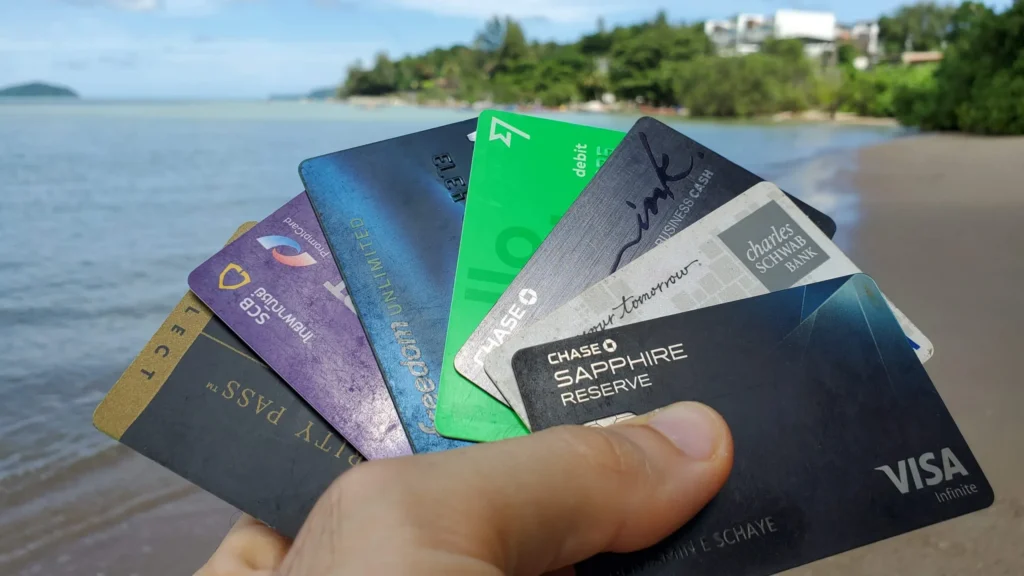
The Chase Sapphire Reserve is the most complete package for frequent international travelers. Unlike the Amex Platinum — which is unmatched for lounge access but underwhelms on protections and everyday earning — the Reserve delivers a balanced combination of earning, protections, and perks.
Why 3x on Dining Worldwide Matters
Most international spending for leisure travelers concentrates in two categories: dining and travel (flights, hotels, transportation). The Reserve earns 3x on restaurant dining globally, not just at U.S. establishments. A week of meals in Tokyo, Rome, or Mexico City all earn 3x Ultimate Rewards points. At 2 cents per point via transfer partners, that’s 6% return on every restaurant bill abroad.
The Amex Platinum earns just 1x at restaurants — making the Reserve dramatically more rewarding for the food-focused international traveler.
Emergency Medical Coverage: A Critical Advantage
The Sapphire Reserve includes emergency medical evacuation coverage up to $100,000 when you or an immediate family member are injured or become sick 100 miles+ from home during a covered trip. This coverage doesn’t exist on the Sapphire Preferred and is not straightforwardly covered on the Amex Platinum in the same way.
Medical evacuation from a remote international location can easily exceed $100,000. While this coverage has limits and terms, it provides a meaningful safety net that no-fee or mid-tier cards simply don’t offer.
Additionally, the Reserve includes up to $2,500 for medical expenses per covered traveler ($50 deductible) for medical events during a covered trip. For travelers venturing to countries with limited healthcare infrastructure, this coverage can be the most valuable thing on the card.
Trip Cancellation and Trip Delay Coverage
- Trip cancellation/interruption: Up to $10,000 per covered traveler, $20,000 per trip
- Trip delay: Coverage kicks in after just 6 hours (vs. 12 hours on the Preferred), covering up to $500 per ticket in accommodation and meals
- Primary rental car insurance: Covers damage/theft up to $75,000 — you don’t file with your personal auto insurance first
For international itineraries involving multiple connections, remote destinations, or significant upfront non-refundable costs, these protections are worth hundreds to thousands of dollars in potential reimbursement.
Access to Air Canada Maple Leaf Lounges
In addition to Priority Pass and Chase Sapphire Lounges, the Reserve provides access to select Air Canada Maple Leaf Lounges in the U.S., Canada, and Europe when flying on Star Alliance carriers (United, Air Canada, Lufthansa, etc.). This is a notable perk for cardholders traveling through Toronto, Montreal, or European airports with Maple Leaf Lounge locations.
Who It’s For: Frequent international travelers who want the strongest available combination of worldwide earning, emergency medical coverage, and travel protections. The Reserve is the benchmark card for serious global travelers.
2. Chase Sapphire Preferred® — Best Mid-Tier International Travel Card
Annual Fee: $95 Foreign Transaction Fee: $0 Card Network: Visa Best International Earning: 3x on dining worldwide; 2x on all travel Travel Protections: Trip cancellation up to $10,000/person; primary rental car insurance; trip delay after 12 hours; baggage delay after 6 hours
The Chase Sapphire Preferred is the best value travel card for international trips at any price point. At $95/year, it earns 3x on dining worldwide and provides the most comprehensive travel insurance package of any mid-tier card — including primary rental car insurance and trip cancellation coverage that most competing $95 cards don’t match.
Important: The Preferred Does NOT Include Emergency Medical Evacuation
One of the most commonly misunderstood aspects of the Preferred vs. Reserve decision: the Sapphire Preferred does not include emergency medical evacuation coverage. The $100,000 medical evacuation benefit is exclusive to the Chase Sapphire Reserve.
For casual international travelers visiting developed countries with reliable healthcare (Western Europe, Japan, Australia, Canada), this distinction may be acceptable. For travelers venturing to developing countries, remote destinations, or areas with limited healthcare infrastructure, the Reserve’s evacuation coverage may justify the higher annual fee.
Primary Rental Car Insurance: Rare at $95
The Preferred’s primary rental car coverage is exceptional for a $95 card. Internationally, renting a car can involve rental agencies pushing expensive collision damage waivers. With the Preferred’s primary coverage, you decline the agency’s insurance and save $15–$40/day — on a 10-day rental, that’s $150–$400 in savings that far exceed the card’s annual fee.
The World of Hyatt Transfer: International Hotel Value
The Preferred transfers UR points to World of Hyatt at 1:1 — the most valuable hotel transfer partner available to any consumer credit card. For international travelers who stay at Hyatt properties abroad, this transfer can deliver 3–5 cents per point in hotel value, making international stays significantly cheaper when booked with transferred points.
Who It’s For: International travelers who want strong trip protections at low annual fee, particularly those who rent cars abroad frequently or stay at Hyatt properties internationally. Not ideal for travelers venturing to high-risk or remote destinations where medical evacuation coverage matters.
3. Capital One Venture X — Best Value Premium International Card
Annual Fee: $395 Foreign Transaction Fee: $0 Card Network: Visa Best International Earning: 2x on all purchases worldwide; 10x on hotels & rental cars via C1 Travel; 5x on flights via C1 Travel Travel Protections: Trip cancellation/interruption; trip delay; emergency medical evacuation; primary rental car insurance
The Capital One Venture X is the best-value premium international travel card. Its $395 annual fee is substantially lower than the Sapphire Reserve ($795) or Amex Platinum ($895), yet it includes airport lounge access, a $300 annual travel credit that largely offsets the fee, and 10,000 anniversary miles worth $100 in travel.
2x on Every International Purchase — Simplicity Wins
The Venture X earns a flat 2x on every purchase worldwide, with no categories to manage. Every meal in Paris, every taxi in Tokyo, every market purchase in Mexico City earns 2 miles per dollar. At approximately 1.7–2 cents per mile when transferred to Capital One’s airline partners, that’s 3.4–4% effective return on all international spending.
This simplicity is particularly valuable internationally, where merchant category coding can be inconsistent. Category-based cards may not correctly identify foreign restaurants as restaurants, or local transit as transit. The Venture X’s flat rate ensures consistent earning regardless of how foreign merchants are categorized.
Airport Lounge Access at a More Accessible Fee
The Venture X provides Priority Pass Select membership with access to 1,300+ airport lounges worldwide — the same Priority Pass network as the Sapphire Reserve and Amex Platinum, at a $400 lower annual fee. For travelers whose primary lounge benefit is Priority Pass (rather than the exclusive Chase Sapphire or Amex Centurion lounges), the Venture X delivers equivalent lounge value at significantly lower cost.
Capital One Transfer Partners: Strong for International Redemptions
Capital One miles transfer to 15+ airline partners including Air Canada Aeroplan, British Airways Avios, Avianca LifeMiles, Singapore Airlines KrisFlyer, and Turkish Airlines Miles&Smiles. Turkish Miles&Smiles in particular is well-regarded for Star Alliance premium cabin award bookings at competitive mile prices.
Who It’s For: International travelers who want premium lounge access and travel protections without committing to $795+ annual fees. An excellent “premium benefits at value price” option.
4. American Express Platinum® — Best for Lounge Access Abroad
Annual Fee: $895 Foreign Transaction Fee: $0 Card Network: American Express (widely accepted in developed markets; carry a Visa backup) Best International Earning: 5x on flights booked directly or via Amex Travel; 1x on hotels and dining Lounge Access: Centurion Lounges; Priority Pass Select; Delta Sky Club (10 visits/year); Plaza Premium
The Amex Platinum is the definitive card for airport lounge access globally, but it presents important trade-offs for international travelers that are worth understanding clearly.
The Best Lounge Network for International Airports
With access to Centurion Lounges, Priority Pass (1,300+ globally), and Plaza Premium lounges at dozens of international airports, the Platinum’s lounge access is unmatched in breadth. For travelers connecting through London Heathrow, Singapore Changi, Hong Kong, Dubai, or other major international hubs, Plaza Premium and Priority Pass lounges provide meaningful comfort during long layovers.
Amex is also expanding its Centurion Lounge presence internationally, with new locations planned in Amsterdam and other major airports in 2026.
Critical: Amex Earns Only 1x on International Dining and Hotels
The Platinum’s 5x is reserved for flights booked directly with airlines or through Amex Travel. At foreign restaurants, local hotels, and every other international merchant, the Platinum earns just 1x. For travelers who dine out extensively abroad or book hotels directly with the property, the Platinum is significantly less rewarding than the Sapphire Reserve (which earns 3x on dining globally and 4x on direct hotel bookings).
Amex Acceptance: Carry a Backup Card
American Express acceptance, while excellent in the U.S., Western Europe, Australia, and major global cities, remains inconsistent in:
- Smaller merchants and local restaurants in many developing countries
- Rural areas globally
- Train stations, local transit, and informal markets
- Some Asian, Middle Eastern, and African countries
If you rely solely on the Amex Platinum internationally, you will encounter situations where the card is not accepted. Always carry a Visa or Mastercard backup — the Wells Fargo Autograph (no fee, no FTF) is an ideal pairing.
Global Hotel Program and Fine Hotels + Resorts
The Platinum’s access to Fine Hotels + Resorts (daily breakfast for two, $100 property credit, room upgrades when available at 1,000+ luxury properties) and The Hotel Collection ($100 on-property credit at 2-night minimum stays) can be genuinely valuable for luxury travelers who stay at qualifying properties internationally.
Who It’s For: Travelers who spend extensively in airports and want the widest possible lounge network, including Centurion Lounges at U.S. airports before international flights, and Plaza Premium access abroad. Less suitable as a sole international spending card due to 1x on dining and Amex acceptance limitations.
5. Capital One Venture — Best International Card for Simplicity
Annual Fee: $95 Foreign Transaction Fee: $0 Card Network: Visa Best International Earning: 2x on all purchases; 5x on hotels and rental cars via Capital One Travel Key Benefit: Global Entry or TSA PreCheck credit (up to $120 every 4 years)
The Capital One Venture is the right card for international travelers who want a simple, reliable earner that works everywhere, requires no thought, and costs $95/year. Its flat 2x on everything means consistent rewards regardless of where you are or how foreign merchants categorize your purchases.
The Global Entry credit is particularly valuable for international travelers: Global Entry ($120 every 5 years) gives you expedited U.S. Customs re-entry on return from international trips, plus automatic TSA PreCheck access. The Venture card’s credit covers this cost entirely.
Who It’s For: Casual international travelers who take 1–3 international trips per year and want simple, consistent rewards abroad without managing categories or complex redemptions.
6. Wells Fargo Autograph® — Best No Annual Fee International Card
Annual Fee: $0 Foreign Transaction Fee: $0 Card Network: Visa Best International Earning: 3x on restaurants, travel, gas, transit, streaming; 1x on everything else Transfer Partners: 9 airlines at 1:1 (Air France/KLM, British Airways, Avianca, JetBlue, Virgin Atlantic, and more)
The Wells Fargo Autograph is the best no-annual-fee card for international travel, offering something genuinely rare: 3x on dining and travel worldwide with no foreign transaction fees and transferable points to airline partners — all without paying an annual fee.
For international dining, the 3x rate applies globally, not just at U.S. restaurants. A week of meals in Southeast Asia or Europe earns 3x Wells Fargo Rewards points that can transfer to Air France/KLM Flying Blue or British Airways Avios for future award travel.
Pair it with: Wells Fargo Active Cash (2% everywhere for non-3x spending at home), giving you a complete two-card system with no annual fees and airline transfer partner access.
Who It’s For: Budget-conscious international travelers who want competitive rewards and airline transfer partner access without any annual fee.
7. Capital One Savor Cash Rewards — Best No-Fee Dining Card Abroad
Annual Fee: $0 Foreign Transaction Fee: $0 Card Network: Mastercard (near-universal acceptance) Best International Earning: 3% on dining and entertainment worldwide; 1% on everything else
The Capital One Savor earns 3% on dining at restaurants globally with no foreign transaction fees. Unlike many category-earning cards that restrict dining bonus rates to U.S. establishments, the Savor applies its dining rate internationally.
For travelers who eat out extensively abroad and want cash back (not points), the Savor delivers the highest no-annual-fee dining rate for international restaurant spending. Its Mastercard network provides excellent global acceptance — often superior to American Express and more consistent than some regional issuers.
Who It’s For: International travelers who want cash back on restaurant spending abroad with no annual fee and strong global acceptance.
Critical Tips for Using Credit Cards Internationally
Always pay in local currency. When a foreign merchant (restaurant, hotel, ATM) asks if you want to pay in U.S. dollars — always decline. This is called Dynamic Currency Conversion (DCC), and merchants charge their own exchange rate on top of fees, typically 3–7% worse than your card’s standard rate. Always choose local currency and let your card handle the conversion at the interbank rate.
Set up a PIN before you travel. Most European train ticket machines, parking kiosks, and some smaller retailers require chip-and-PIN rather than chip-and-signature. Call your card issuer before your trip and request to set up a 4-digit PIN on your card. This is especially important in the UK, Netherlands, Germany, and Scandinavia.
Notify your card issuer before traveling. Unusual international transactions can trigger fraud alerts that freeze your card. Many issuers now monitor travel automatically, but calling or using the mobile app to set travel notifications before departure adds a layer of protection.
Carry two different network cards. Even the best Amex international card can be declined at some merchants. A Visa or Mastercard backup ensures you can complete any purchase anywhere. The Wells Fargo Autograph (Visa, no annual fee, no FTF) is an excellent backup for Amex primary cardholders.
Understand your medical evacuation coverage. Credit card medical coverage is not comprehensive travel insurance. If you’re traveling to remote areas, developing countries, or engaging in adventure activities, consider supplementing with a dedicated travel medical policy or a medical evacuation membership service (MedJet, Global Rescue) in addition to your card’s coverage.
Use your card for large purchases, cash for small ones. In many countries, small vendors and local markets only accept cash. Keep enough local currency for markets, tips, small cafés, and rural areas. Use your no-FTF credit card for hotels, restaurants, and larger purchases.
Understanding What “No Foreign Transaction Fee” Actually Means
A foreign transaction fee (FTF) is a surcharge applied by your card issuer when you make a purchase that passes through a foreign bank or is processed in a foreign currency. Typically 3% of each transaction, it applies to:
- Physical purchases made while traveling abroad
- Online purchases from international merchants (even from home)
- Cash advances at foreign ATMs
The fee appears as a line item on your statement or is folded into the purchase amount. Many travelers don’t notice it until reviewing their statements — at which point they’ve paid hundreds in fees they could have avoided.
A 3% FTF on $5,000 in international spending = $150 in fees. On $10,000 = $300. For frequent international travelers, choosing a no-FTF card is genuinely one of the most financially impactful changes they can make.
Frequently Asked Questions
What credit card has the best international acceptance? Visa and Mastercard have the broadest global acceptance. For international travel, any card running on the Visa or Mastercard network (Chase Sapphire, Capital One Venture, Wells Fargo Autograph) will be accepted at nearly all merchants worldwide. American Express has improved significantly but remains less universal, particularly in developing countries and rural areas.
Does the Chase Sapphire Preferred have emergency medical evacuation coverage? No. Emergency medical evacuation coverage up to $100,000 is exclusive to the Chase Sapphire Reserve. The Preferred includes trip cancellation insurance and primary rental car coverage, but not standalone emergency medical or evacuation coverage.
Which is better for international travel — Amex Platinum or Chase Sapphire Reserve? Depends on your priorities. Amex Platinum wins for airport lounge access breadth (Centurion + Priority Pass + Plaza Premium). Chase Sapphire Reserve wins for worldwide earning rates (3x dining globally vs. Amex’s 1x), travel protections (medical evacuation, primary rental car insurance), and Visa’s broader acceptance. For most international travelers who dine out regularly, the Sapphire Reserve is more practical. For lounge-focused travelers, the Amex Platinum is unmatched.
Should I avoid using my card at ATMs abroad? Credit cards typically charge cash advance fees (3–5% of the amount) plus high interest from the moment of withdrawal. For cash abroad, a travel-optimized debit card (like Charles Schwab’s no-fee debit card, which reimburses ATM fees) is usually better than using a credit card at foreign ATMs.
What is Dynamic Currency Conversion and why should I avoid it? Dynamic Currency Conversion (DCC) lets foreign merchants charge you in U.S. dollars rather than local currency. The merchant’s exchange rate is typically 3–7% worse than your card network’s rate. Always decline DCC and pay in local currency — your card’s exchange rate is almost always better.
Do credit card rewards points expire after international use? No. Chase Ultimate Rewards, Capital One Miles, Amex Membership Rewards, and Wells Fargo Rewards do not expire as long as your account remains open, regardless of where or how the points are earned.
Information in this article is based on publicly available data from official issuer websites and financial publications as of May 2026. Card network acceptance, foreign transaction fee policies, and travel protections are subject to change. Emergency medical coverage terms vary significantly — always review your specific card’s Guide to Benefits before traveling. This article is for informational purposes only.